By Mohamed Abdel-Kareem
Publication Date: 2026-10-19 21:37:00
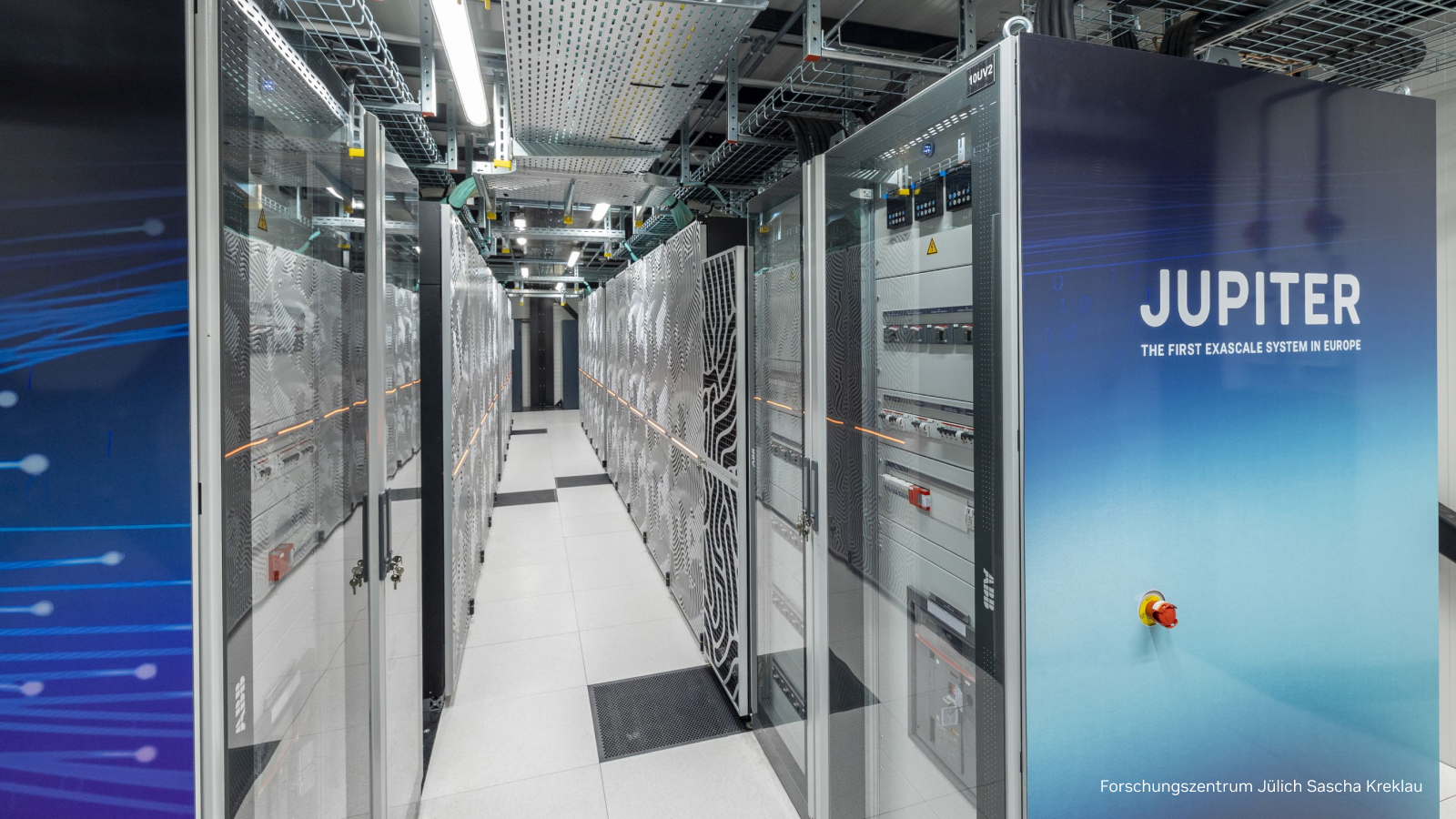
In a technical milestone announced at GTC Berlin 2026, NVIDIA and the Jülich Supercomputing Centre (JSC) at Forschungszentrum Jülich have executed a 104-qubit fault-tolerant quantum computing simulation on JUPITER, Europe’s first exascale supercomputer.
Detailed in an official release and accompanying NVIDIA technical report (“Advancing Fault-Tolerant Quantum Computing with GPU-Accelerated Simulation“), the simulation modeled the physical execution of magic state cultivation under realistic hardware noise—validating a fault-tolerant protocol that reduces physical qubit overhead by up to 90% compared to traditional cascade distillation factories.
| [ JUPITER Exascale Simulation & Hardware Infrastructure Profile ] | ||
|---|---|---|
| System / Software Pillar | Hardware & Computing Infrastructure | Simulation Scale & Performance Metrics |
| • Supercomputing Platform | • JUPITER (Jülich Supercomputing Centre) | • 8,192 NVIDIA GH200 Grace Hopper Superchips connected via Bull exascale interconnect. |
| • Development & Staging | • NVIDIA Accelerated Quantum Research Center (NVAQC) | • Staged on NVIDIA GB200 NVL72 Grace Blackwell racks to optimize 4-to-hundreds GPU scaling before exascale run. |
| • QEC Protocol Simulated | • Magic State Cultivation (104 Qubits) | • Distance-3 Color Code → Distance-7 Hybrid Color/Surface Code transition with active flag error detection. |
| • Noise & Physical Modeling | • Coherent Phase Noise + 3-Level Leakage | • 45-bit encoded state vector… |