
By SEMIVISION
Publication Date: 2026-09-08 02:32:00
If NVIDIA’s message at Hot Chips 2026 had to be summarized in one sentence, it would be this: the next phase of competition is no longer about who has the fastest GPU. It is about who can combine compute, memory, networking, security, storage, cooling, and software into an AI factory that delivers the highest efficiency, the lowest latency, and the most sustained useful output over time.
NVIDIA’s six presentations covered the Rubin GPU, Vera CPU, Groq 3 LPU/LPX, BlueField-4 DPU, Spectrum-X networking, and the integration of RISC-V CPUs into the CUDA and NVLink Fusion ecosystem. At first glance, these appear to be separate technical topics. In reality, they all revolve around the same structural shift: agentic AI is turning inference from a one-shot query into a persistent, multi-stage workflow involving observation, reasoning, tool calls, browser interaction, security controls, and long-term memory.
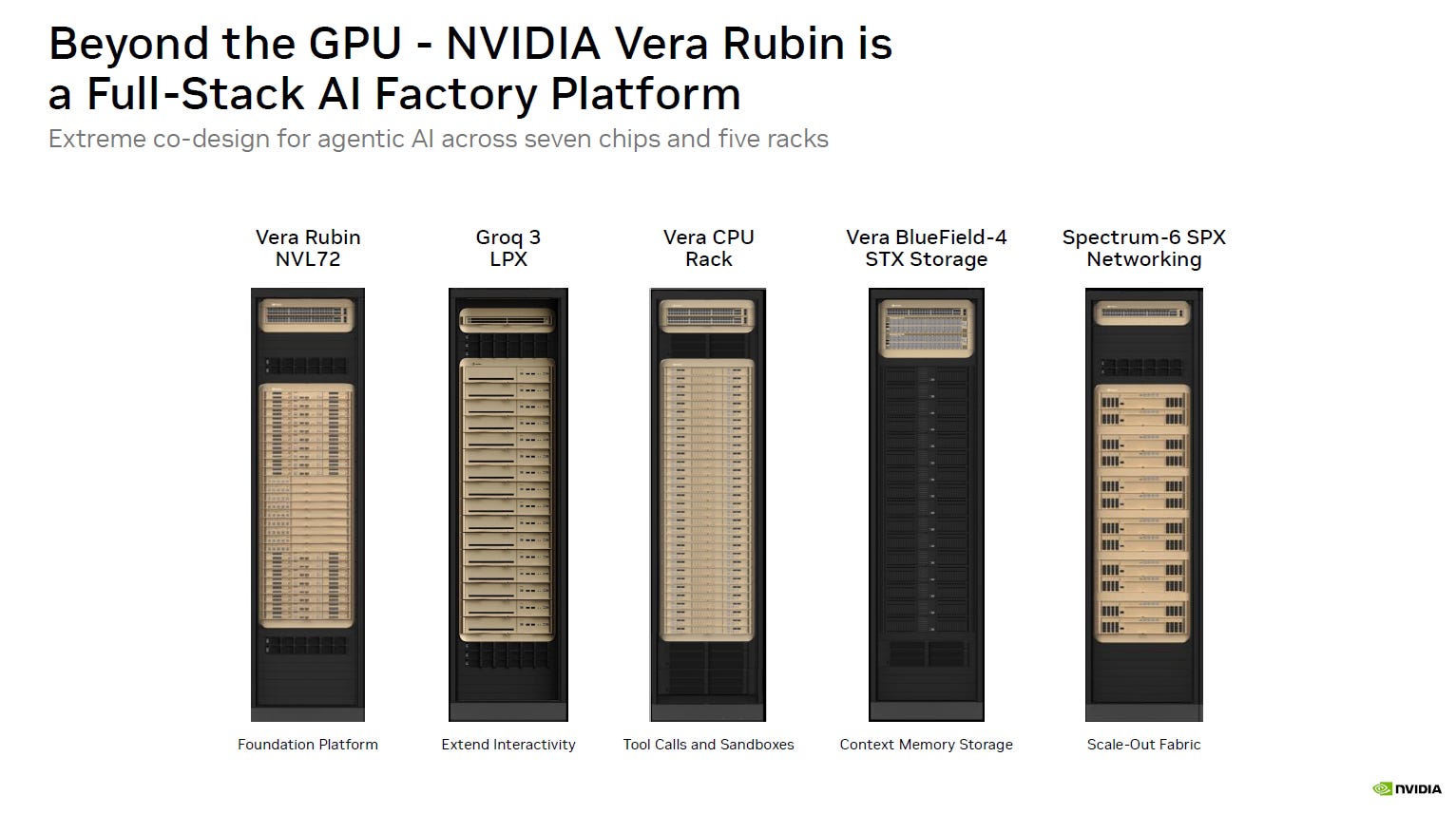
As context windows continue to expand, any pause in the system—whether caused by CPU orchestration, memory movement, network congestion, storage access, or failure recovery—can be magnified into either user-visible latency or higher data-center operating cost.
Traditional processor presentations tend to emphasize peak compute performance. NVIDIA is reframing the optimization target around what it calls token revenue: how many useful tokens a system can produce within finite limits on power, time, infrastructure, and equipment lifetime.
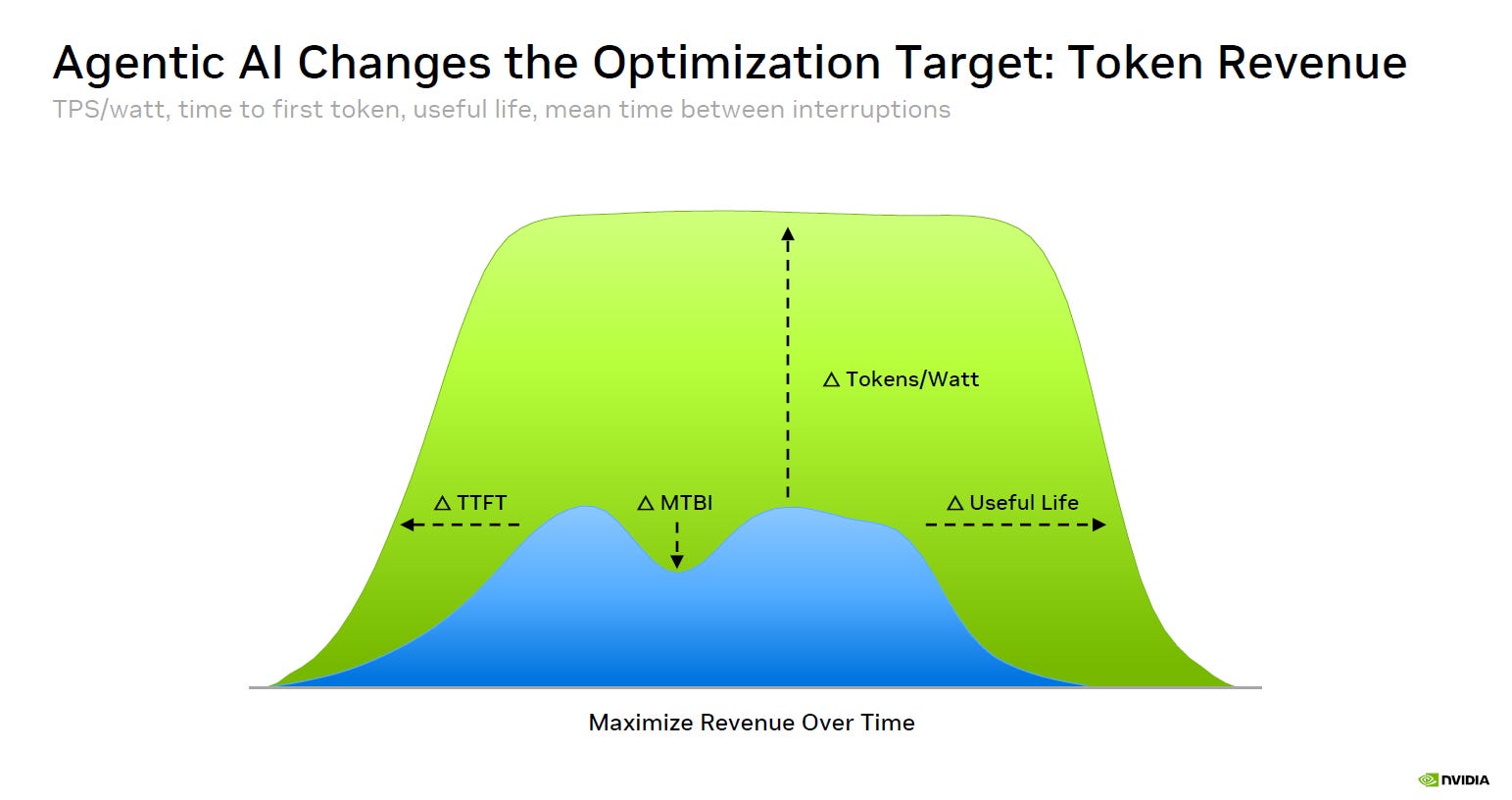
This framework incorporates metrics…


