By Mayank Parmar
Publication Date: 2026-10-18 06:58:00
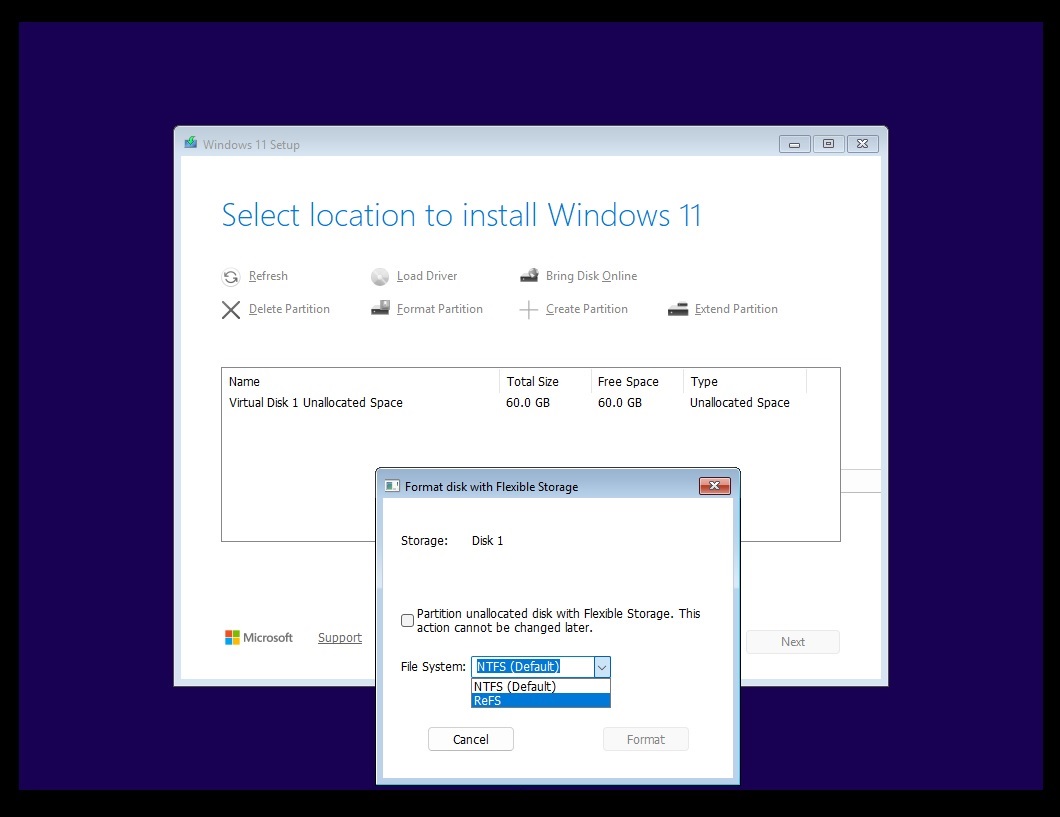
Windows 11 is trying to make it easier to clean-install the OS using a ReFS partition instead of defaulting to the familiar NTFS. While that remains in testing and we don’t know when ReFS will replace NTFS as the default format on Windows, Microsoft says it won’t allow ReFS on USB drives, and it makes you wonder what happened to the big ReFS bet.
For those unaware, it’s widely believed that ReFS will replace Windows 11’s NTFS as the default storage partition, and it totally makes sense, as it’s the ideal “successor.”
ReFS stands for Resilient File System, and it’s better than NTFS in many ways, including performance, security, and even improved data integrity. Microsoft already uses it for Dev Drive in Windows 11, and there have been plans to show a ReFS option in Windows Setup. ReFS also boosts partition size to 35 petabytes, and there are many other benefits, but we’re going to talk about that a bit later.