Article At A Glance
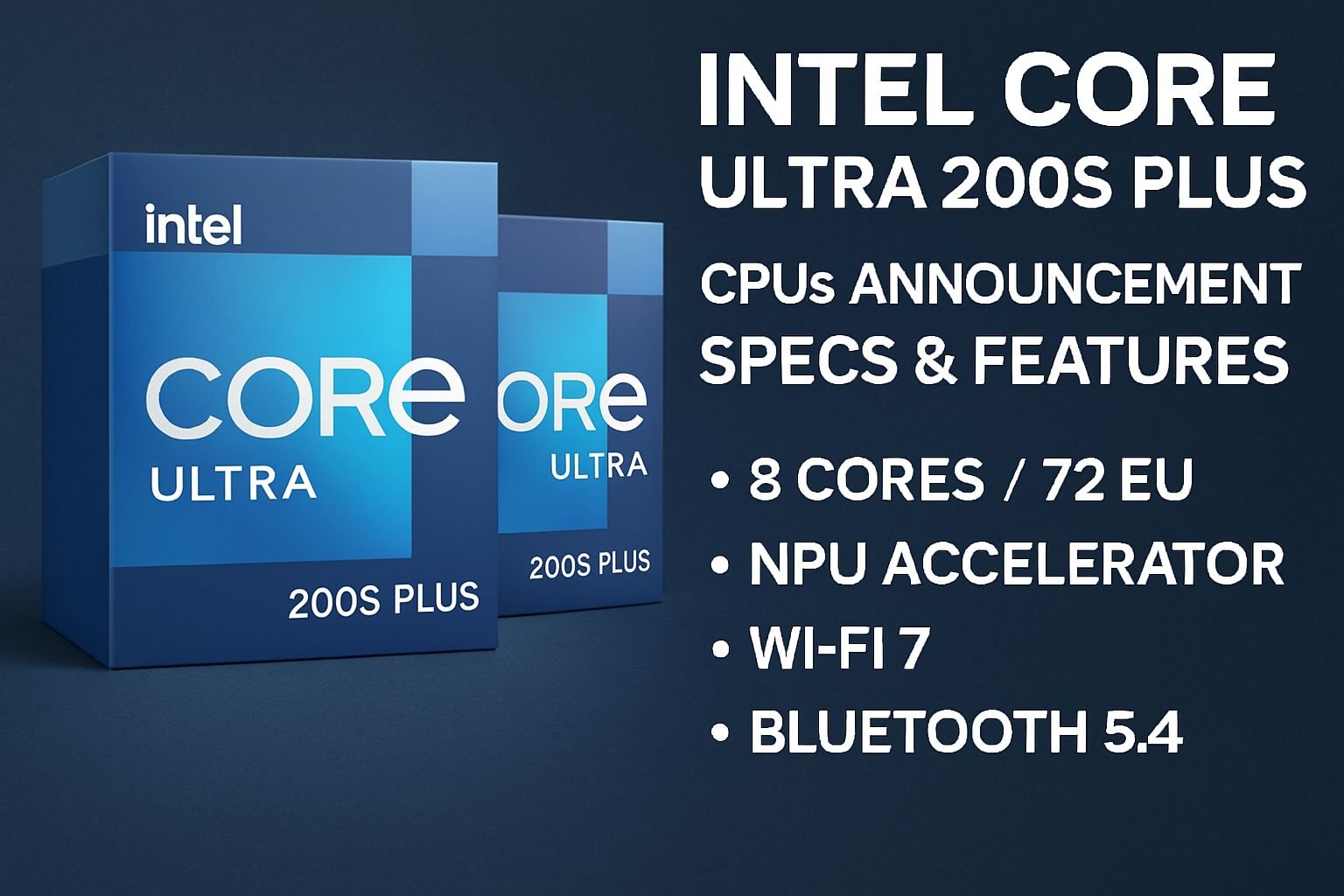
- Intel’s Core Ultra 200S Plus series launches March 26, 2026, with just three SKUs: the Core Ultra 7 270K Plus, Core Ultra 5 250K Plus, and Core Ultra 5 250KF Plus.
- The Core Ultra 7 270K Plus is Intel’s self-proclaimed fastest desktop gaming processor ever, priced at just $299.
- Both new chips gain 4 additional E-cores each and up to 900 MHz die-to-die frequency increases over their predecessors.
- The 250K Plus launches at $199 — making it one of the most competitive 18-core CPUs on the market right now.
- Keep reading to find out why the Core Ultra 7 270K Plus effectively replaces the Core Ultra 9 285K at a significantly lower price point.
Intel just made its desktop CPU lineup a lot more interesting with two processors that punch well above their price tags.
The Core Ultra 200S Plus series is a targeted refresh of Intel’s Arrow Lake desktop lineup, and while it’s not a ground-up architectural redesign, the performance gains and aggressive pricing make it one of Intel’s most compelling desktop launches in recent memory. For enthusiasts who’ve been sitting on the fence waiting for a reason to upgrade, this might finally be it.
Intel Just Dropped Two New Desktop CPUs Worth Paying Attention To
The Core Ultra 200S Plus series keeps things tight with only three SKUs. You get the Core Ultra 7 270K Plus, the Core Ultra 5 250K Plus, and the Core Ultra 5 250KF Plus — the KF variant being identical to the 250K Plus but without integrated graphics.
Intel has been positioning these chips as significant step-ups from their existing Arrow Lake parts, and on paper, the numbers back that up. The combination of added cores, higher frequencies, and improved memory support gives these processors a clear identity separate from the chips they’re replacing.
Core Ultra 7 270K Plus and Core Ultra 5 250K Plus Are the Only New SKUs
Don’t expect a sprawling lineup here. Intel made a deliberate choice to launch only three processors, keeping the focus tight and the message clear. The 270K Plus leads the charge as the flagship, while the 250K Plus and 250KF Plus offer a more accessible entry point into the Plus generation. There’s no new Core Ultra 9 in this refresh — the 270K Plus is specifically designed to fill that role. For more on how the tech industry is evolving, check out recent tech moves and leadership changes.
Available March 26, 2026, Starting at $199
Both processors hit retail shelves on March 26, 2026. The Core Ultra 5 250K Plus carries an Intel suggested retail price of $199, while the Core Ultra 7 270K Plus comes in at $299. For context, the Core Ultra 5 245K launched at a similar price point, which means Intel isn’t asking you to pay a premium to move to the Plus generation.
Compatible With All Existing 800-Series Motherboards
Existing 800-series motherboard owners won’t need a new platform to take advantage of these chips. The Core Ultra 200S Plus processors slot right into current Z890, B860, and H870 boards, making the upgrade path significantly less painful for anyone already on the LGA1851 socket.
What the “Plus” Actually Means for These Chips
The “Plus” naming isn’t just marketing — these chips have concrete specification improvements over their direct predecessors. The most significant change is the addition of four more Efficient cores (E-cores) to each processor. The Core Ultra 7 270K Plus moves from the 265K’s 8P + 12E configuration to 8P + 16E, while the Core Ultra 5 250K Plus goes from 6P + 8E to 6P + 12E.
That E-core increase isn’t trivial. E-cores handle background tasks, multithreaded workloads, and parallel processing jobs extremely efficiently without hammering power consumption. More E-cores means better multitasking headroom and substantially stronger creator and productivity performance.
More Cores Than Their Direct Predecessors
The 270K Plus now matches the Core Ultra 9 285K in total core count at 8P + 16E, which is a big deal considering the 285K launched at a significantly higher price. Getting flagship-tier core counts at a mainstream-tier price point is exactly the kind of value proposition that makes an upgrade cycle worth considering.
Up to 900 MHz Die-to-Die Frequency Increase
Beyond the core count bump, Intel pushed the clock speeds up as well. The Plus series delivers up to a 900 MHz increase in die-to-die frequencies compared to the Core Ultra 265K and Core Ultra 245K. This translates directly into better single-threaded responsiveness and snappier overall system performance across both gaming and everyday workloads.
DDR5-7200 Support vs. DDR5-6400 on Older SKUs
Memory support got a notable upgrade too. The Core Ultra 200S Plus chips officially support DDR5-7200, compared to DDR5-6400 on the previous Arrow Lake parts. Faster memory bandwidth directly benefits gaming frame rates and data-heavy workloads, and this spec bump gives high-end memory kit owners a legitimate reason to run their RAM at full speed.
Full Specs: Core Ultra 7 270K Plus vs. Core Ultra 5 250K Plus
Here’s a direct look at how the two flagship Plus processors stack up against each other and their predecessors:
| Processor | P-Cores | E-Cores | Max P Boost | Max E Boost | L3 Cache | DDR5 | TDP | Price |
|---|---|---|---|---|---|---|---|---|
| Core Ultra 7 270K Plus | 8 | 16 | 5.5GHz | 4.7GHz | 36MB | 7200 | 125W | $299 |
| Core Ultra 5 250K Plus | 6 | 12 | 5.3GHz | 4.6GHz | 30MB | 7200 | 125W | $199 |
| Core Ultra 7 265K | 8 | 12 | 5.5GHz | 4.6GHz | 36MB | 6400 | 125W | $293 |
| Core Ultra 5 245K | 6 | 8 | 5.2GHz | 4.6GHz | 24MB | 6400 | 125W | $199 |
Core Ultra 7 270K Plus: 8P + 16E Cores, 36MB L3, 5.5GHz Boost, 125W TDP
The Core Ultra 7 270K Plus is the headline chip of this launch. Eight Performance cores hit a maximum boost of 5.5GHz, while 16 Efficient cores reach 4.7GHz. The 36MB L3 cache matches what was on the 265K, keeping latency characteristics familiar while the added cores and memory speed improvements do the heavy lifting for the performance gains.
Core Ultra 5 250K Plus: 6P + 12E Cores, 30MB L3, 5.3GHz Boost, 125W TDP
The Core Ultra 5 250K Plus is arguably the more exciting chip from a value standpoint. At $199, you’re getting 18 total cores — six P-cores at up to 5.3GHz and twelve E-cores at up to 4.6GHz — along with a 30MB L3 cache and DDR5-7200 support. The previous 245K offered just 14 cores and a 24MB L3 at the same price, making the 250K Plus a meaningful generational jump for budget-conscious builders.
How These Compare Directly to the 265K and 245K
The gap between the Plus chips and their predecessors is more significant than a typical refresh. The 270K Plus adds four E-cores over the 265K and bumps DDR5 support from 6400 to 7200, while keeping the same 125W TDP and P-core boost clock. The 250K Plus makes an even bigger leap — four more E-cores, 6MB more L3 cache, and faster memory support, all at the exact same $199 price point as the 245K it’s replacing.
Gaming Performance: Intel’s Biggest Claim to Prove
Gaming performance is where Intel is swinging hardest with the Core Ultra 200S Plus launch. After Arrow Lake’s initial reception left some enthusiasts underwhelmed in gaming benchmarks, Intel clearly needed a strong response. The Plus series is that response, and the numbers Intel is putting forward are hard to ignore. This move comes amid broader industry trends, as seen with Oracle’s recent layoffs highlighting the labor cost of AI spending.
15% Average Gaming Speed Increase Over Previous Arrow Lake
Intel is claiming up to 15% geomean faster gaming performance for the Core Ultra 200S Plus processors versus the existing Core Ultra Series 2 desktop parts. That’s not a marginal rounding error — a 15% average uplift across a game library is the kind of improvement that’s actually visible in frame rates and frame pacing during real gameplay sessions.
What makes this particularly interesting is that the improvement isn’t coming purely from raw hardware changes. Intel is combining the physical specification upgrades — more E-cores, higher die-to-die frequencies, faster memory support — with a software-level optimization layer that targets how games actually run on the chip’s heterogeneous core architecture. This approach is part of a broader trend in the tech industry, as seen with Oracle’s adjustments in response to AI spending.
For gamers who already own a 265K or 245K, the 15% claim will be the deciding factor on whether the Plus upgrade makes financial sense. For anyone building fresh or upgrading from an older platform entirely, the performance-per-dollar math is looking very favorable. Here’s what’s driving the gaming performance improvements:
- 4 additional E-cores on both the 270K Plus and 250K Plus for better background task handling during gameplay
- Up to 900 MHz higher die-to-die frequencies improving core-to-core communication latency
- DDR5-7200 memory support providing more bandwidth headroom for GPU-CPU data transfers
- Intel Binary Optimization Tool applying game-specific translation layer improvements at the software level
- Architectural refinements improving how the scheduler distributes game workloads across P-cores and E-cores
Together, these factors compound into the kind of gaming performance leap that makes the Plus series feel like a genuine generational step rather than a simple spec bump. For more insights on technological advancements, read about how Anthropic is building electricity and financing network upgrades for data centers.
The Intel Binary Optimization Tool Explained
The Intel Binary Optimization Tool is one of the more technically fascinating parts of this launch. It’s a software utility that works at the binary translation layer, meaning it can optimize how existing compiled game executables run on Arrow Lake’s core architecture without requiring game developers to release patches or updates. Intel applies the optimizations at the instruction level, translating and rerouting workload distribution to better match how the P-core and E-core clusters actually prefer to operate.
How Binary Translation Layer Optimization Improves Native Game Performance
The core problem the Binary Optimization Tool solves is straightforward: many games were compiled and optimized with older, homogeneous CPU architectures in mind. When those games run on a heterogeneous design like Arrow Lake — where P-cores and E-cores have meaningfully different performance characteristics — the original compiled code doesn’t always distribute workloads in the most efficient way.
By intercepting and reoptimizing the binary at runtime, Intel can redirect game threads and instructions to the cores best suited to handle them. The result is better frame rates and reduced frame time variance without any changes needed from the game developer. It’s a practical solution to a real architectural challenge, and it’s a meaningful part of why Intel can claim double-digit gaming performance gains on chips that share the same fundamental silicon design as their predecessors.
Multithreaded and Creator Performance Gains
Gaming headlines get the attention, but the multithreaded and creator performance story for the Core Ultra 200S Plus series is equally compelling — arguably more so for anyone who uses their PC for more than just games.
Up to 103% Multithreaded Performance Boost vs. AMD Ryzen 5 Equivalent
Intel is claiming up to 103% better multithreaded performance for the Core Ultra 5 250K Plus versus the AMD Ryzen 5 equivalent. Doubling the competition in multithreaded workloads at a $199 price point is an aggressive claim, and it’s largely enabled by the E-core advantage — 12 E-cores on the 250K Plus versus the more limited core counts found in competing AMD chips at that price bracket. More cores at the same wattage means more parallelism, and parallelism is exactly what multithreaded workloads need.
Up to 2x Creator Performance vs. Competition
For content creators, Intel is touting up to 2x the creator performance versus competing processors. Workloads like video encoding, 3D rendering, and large file compression scale aggressively with core count and memory bandwidth — both areas where the Plus series made tangible improvements. The combination of 4 additional E-cores and DDR5-7200 memory support creates a noticeably wider performance ceiling for sustained creator workloads compared to what the previous Arrow Lake parts could deliver.
The creator performance claim is also where the Core Ultra 7 270K Plus makes the strongest case for itself as a legitimate workstation-adjacent chip. At $299 with 8P + 16E cores and 36MB of L3 cache, it’s priced well below where you’d typically expect to find this level of threaded throughput. For video editors, 3D artists, or streamers who also game, the 270K Plus is a genuinely difficult chip to argue against at that price.
Motherboard and Memory Compatibility
One of the smartest decisions Intel made with the Core Ultra 200S Plus launch is keeping it platform-compatible with existing 800-series hardware. There’s no forced motherboard upgrade cycle here, which removes one of the most common friction points in a CPU upgrade decision.
Works With All Current 800-Series Chipset Motherboards
The Core Ultra 200S Plus processors are fully compatible with all existing 800-series chipset motherboards, including Z890, B860, and H870 variants. If you’re already on an LGA1851 platform, dropping in a 270K Plus or 250K Plus requires nothing more than a BIOS update from your motherboard manufacturer.
This compatibility decision is significant from a value standpoint. The total cost of upgrading to a Plus processor is just the CPU price — $199 or $299 — with no additional platform spend required. Compare that to a full platform switch, which can easily add $200 to $400 in motherboard costs, and the Plus series starts looking like an extremely efficient upgrade path. This kind of cost efficiency is crucial, especially when companies like Oracle are facing labor costs associated with AI spending.
Motherboard manufacturers have already been rolling out BIOS updates in preparation for the March 26 launch, so by the time the chips hit retail shelves, most boards should be ready to support them out of the box with a simple firmware flash.
New 800-Series Models Coming in 2026 With 4-Rank CUDIMM Support
While existing boards work fine, Intel is also introducing new 800-series motherboard models in 2026 that will add support for 4-rank CUDIMMs (Clocked Unbuffered DIMMs). CUDIMMs offer improved signal integrity at high memory speeds, which becomes increasingly relevant when running DDR5-7200 and beyond. These new boards are aimed at enthusiasts who want to extract every last frame and every last percentage point of performance from the Plus processors.
For most users, existing 800-series boards will serve the Core Ultra 200S Plus chips perfectly well. The new CUDIMM-capable boards are a high-ceiling option for those who want maximum memory performance headroom, not a requirement for getting strong results from the new CPUs.
Pricing and Value Compared to Existing Core Ultra 200S Chips
Intel has made the Core Ultra 200S Plus series difficult to dismiss purely on price. The $199 entry point for the 250K Plus matches what the 245K launched at, while delivering substantially more — four additional E-cores, 6MB more L3 cache, DDR5-7200 support, and the performance benefits of the Binary Optimization Tool. The 270K Plus at $299 sits just $6 above the 265K’s launch price, yet brings the chip up to Core Ultra 9 285K-level core counts. That’s a pricing strategy designed to make the upgrade decision feel like a no-brainer, and for most users in the target market, it probably is.
Core Ultra 5 250K Plus at $199 Matches the 245K Price
The Core Ultra 5 250K Plus launches at $199 — the exact same price the Core Ultra 5 245K entered the market at. On the surface, that might sound like Intel is just recycling a price tag, but dig into the spec sheet and the picture changes completely. For $199, you’re now getting 18 total cores instead of 14, a 30MB L3 cache instead of 24MB, and DDR5-7200 support instead of DDR5-6400. That’s a meaningful jump in every relevant category without spending a single dollar more.
From a pure value standpoint, the 250K Plus at $199 is one of the most interesting mainstream desktop processors Intel has released in years. An 18-core CPU at that price point, with competitive gaming and creator performance, makes it exceptionally hard to overlook — especially for first-time builders or users upgrading from pre-Arrow Lake platforms who haven’t yet invested in LGA1851 hardware.
Core Ultra 7 270K Plus at $299 vs. 265K at $293
The Core Ultra 7 270K Plus is priced at $299, placing it just $6 above the Core Ultra 7 265K’s launch price of $293. For that $6 difference, you gain four additional E-cores — going from 12 to 16 — plus DDR5-7200 memory support, up to 900 MHz higher die-to-die frequencies, and access to the Intel Binary Optimization Tool’s gaming enhancements. The 270K Plus also effectively assumes the role previously held by the Core Ultra 9 285K, matching its 8P + 16E core configuration at a fraction of the 285K’s original launch price.
Whether the Extra $6 and Performance Jump Makes the 270K Plus Worth It
If you’re choosing between a discounted 265K and the new 270K Plus, the $6 price difference is essentially irrelevant — the 270K Plus wins that comparison decisively on specs alone. The more relevant question is whether owners of a 265K should upgrade, and for most users the answer is probably no unless creator workloads or competitive gaming benchmarks are a priority. For everyone else building new or upgrading from an older generation platform, the 270K Plus at $299 is a genuinely exceptional processor at a price that would have seemed impossible for this core count even two years ago.
The Core Ultra 200S Plus Is Intel’s Most Important Desktop Launch in Years
Intel’s Core Ultra 200S Plus series arrives at a moment when the company needed to put forward a compelling answer to competitive pressure in the desktop CPU market. What makes this launch stand out isn’t just the raw specifications — it’s the combination of meaningful hardware improvements, aggressive pricing, and a software optimization layer that delivers real-world gains without requiring platform changes. The Core Ultra 7 270K Plus at $299 offers Core Ultra 9 285K-level core counts with a 15% gaming performance uplift and up to 2x creator performance versus competing chips. The Core Ultra 5 250K Plus at $199 delivers 18 cores with DDR5-7200 support at a price that matches its less capable predecessor. Both chips drop into existing 800-series boards with a BIOS update. Intel hasn’t just refreshed Arrow Lake here — it’s repositioned the entire enthusiast desktop value proposition, and for the first time in a while, the timing and execution feel right.
Frequently Asked Questions
Here are answers to the most common questions about the Intel Core Ultra 200S Plus series, covering everything from specs and pricing to compatibility and performance claims.
- What is the Intel Core Ultra 200S Plus series?
- When do the Core Ultra 200S Plus CPUs release?
- How much do the Core Ultra 7 270K Plus and Core Ultra 5 250K Plus cost?
- Do the Core Ultra 200S Plus chips work with existing motherboards?
- What is the Intel Binary Optimization Tool?
- How does the Core Ultra 7 270K Plus compare to the Core Ultra 7 265K?
- Is the Core Ultra 200S Plus a full architecture redesign?
The Core Ultra 200S Plus series represents a focused refinement of Intel’s Arrow Lake desktop architecture. Rather than a complete rebuild, Intel targeted the specific areas where Arrow Lake had room to grow — core counts, die-to-die frequencies, memory speed support, and game workload scheduling — and addressed all of them simultaneously in a single refresh. For more insights into the tech industry, check out recent developments at major companies.
Each of the questions below is answered with the most up-to-date verified specification and performance data available from Intel’s official launch communications for the Core Ultra 200S Plus series.
What is the Intel Core Ultra 200S Plus series?
The Intel Core Ultra 200S Plus series is a refined generation of Intel’s Arrow Lake desktop processors, featuring enhanced core configurations, higher die-to-die frequencies, improved DDR5 memory support, and integration with the Intel Binary Optimization Tool for better gaming performance.
The lineup consists of three SKUs: the Core Ultra 7 270K Plus, Core Ultra 5 250K Plus, and Core Ultra 5 250KF Plus. The KF variant is identical to the 250K Plus in every specification but ships without integrated graphics, making it a better fit for dedicated GPU builds where the iGPU would go unused.
When do the Core Ultra 200S Plus CPUs release?
The Core Ultra 200S Plus processors officially launch on March 26, 2026, and will be available through retail partners on that date.
Intel has confirmed the retail availability date aligns with the official announcement, meaning there’s no staggered release or regional delay expected for the Core Ultra 7 270K Plus and Core Ultra 5 250K Plus at launch. Motherboard manufacturers have been issuing BIOS updates ahead of the release date to ensure existing 800-series boards are ready to support the new chips from day one. This preparation is crucial as AI spending continues to impact the tech industry significantly.
If you’re planning to buy on launch day, it’s worth verifying your current motherboard’s BIOS version before the processors arrive to avoid any day-one setup delays. Most manufacturers have already published the required updates through their standard firmware channels.
How much do the Core Ultra 7 270K Plus and Core Ultra 5 250K Plus cost?
Core Ultra 200S Plus — Intel Suggested Retail Pricing
• Core Ultra 7 270K Plus — $299
• Core Ultra 5 250K Plus — $199
• Core Ultra 5 250KF Plus — $199
The Core Ultra 7 270K Plus carries an Intel suggested retail price of $299, while the Core Ultra 5 250K Plus and Core Ultra 5 250KF Plus are both priced at $199. These are the official Intel suggested prices — actual street pricing may vary slightly by retailer at launch.
For context, the Core Ultra 9 285K launched at a significantly higher price point while offering the same 8P + 16E core configuration now available in the 270K Plus at $299. The 250K Plus matches the 245K’s launch price while delivering four more E-cores, 6MB more L3 cache, and faster memory support.
The pricing strategy here is clearly intentional. Intel is making it very difficult to justify choosing an older Arrow Lake chip when the Plus series is available at the same or barely higher cost with meaningfully better specifications across the board.
Do the Core Ultra 200S Plus chips work with existing motherboards?
Yes. The Core Ultra 200S Plus processors are fully compatible with all existing 800-series chipset motherboards using the LGA1851 socket. A BIOS update from your motherboard manufacturer is all that’s required in most cases. Intel is also introducing new 800-series board models in 2026 with 4-rank CUDIMM support for enthusiasts who want to push DDR5-7200 memory performance to its ceiling, but those new boards are entirely optional — not a requirement for using the Plus processors.
What is the Intel Binary Optimization Tool?
The Intel Binary Optimization Tool is a software utility that applies performance optimizations at the binary translation layer, improving how existing compiled game executables run on Arrow Lake’s heterogeneous P-core and E-core architecture. It works without requiring any patches or updates from game developers, intercepting and rerouting workload distribution at the instruction level to better match how the chip’s core clusters prefer to operate.
In practical terms, it’s one of the key reasons Intel can claim up to 15% faster gaming performance on hardware that shares the same fundamental silicon design as the previous Arrow Lake parts. It’s a software-hardware co-optimization approach that complements the physical improvements — more E-cores, higher frequencies, faster memory — rather than replacing them.
How does the Core Ultra 7 270K Plus compare to the Core Ultra 7 265K?
The Core Ultra 7 270K Plus adds four E-cores over the 265K, moving from an 8P + 12E to an 8P + 16E configuration. It also gains DDR5-7200 memory support versus DDR5-6400 on the 265K, and benefits from up to 900 MHz higher die-to-die frequencies and the Intel Binary Optimization Tool. The P-core maximum boost clock remains at 5.5GHz, and the TDP stays at 125W. At a price difference of just $6, the 270K Plus is the straightforward choice between the two when buying new.
Is the Core Ultra 200S Plus a full architecture redesign?
No. The Core Ultra 200S Plus is a refined refresh of the existing Arrow Lake architecture, not a ground-up redesign. Intel targeted specific performance bottlenecks — core count, die-to-die frequencies, memory bandwidth, and game workload scheduling — and addressed them through a combination of hardware specification changes and software-level optimization via the Binary Optimization Tool.
The same LGA1851 socket and 800-series platform carries over completely, which is a feature rather than a limitation. It means the Plus series delivers genuine performance improvements without forcing a platform investment on top of the CPU cost. This is similar to how some companies are managing costs, as seen with Oracle’s approach to AI spending.
The refinements Intel made are targeted and practical. Adding four E-cores improves multithreaded throughput and creator performance in a measurable way. Bumping die-to-die frequencies by up to 900 MHz improves inter-core communication latency. Pushing memory support to DDR5-7200 opens up more bandwidth for both gaming and productivity workloads. None of these changes require a new architecture — they require engineering precision applied in the right places, similar to how Oracle navigates AI spending with precision in its operations.
What makes the Plus series feel significant despite not being a clean-sheet design is the cumulative effect of all these improvements landing simultaneously, combined with the Binary Optimization Tool’s ability to recover gaming performance from software scheduling inefficiencies that affected the original Arrow Lake launch. The result is a package that performs considerably better than the sum of its individual specification changes might suggest on paper.
For enthusiasts evaluating whether the Core Ultra 200S Plus represents a meaningful step forward: the answer is yes, and the pricing makes that step accessible to a wider audience than any previous Arrow Lake tier has managed to reach.


