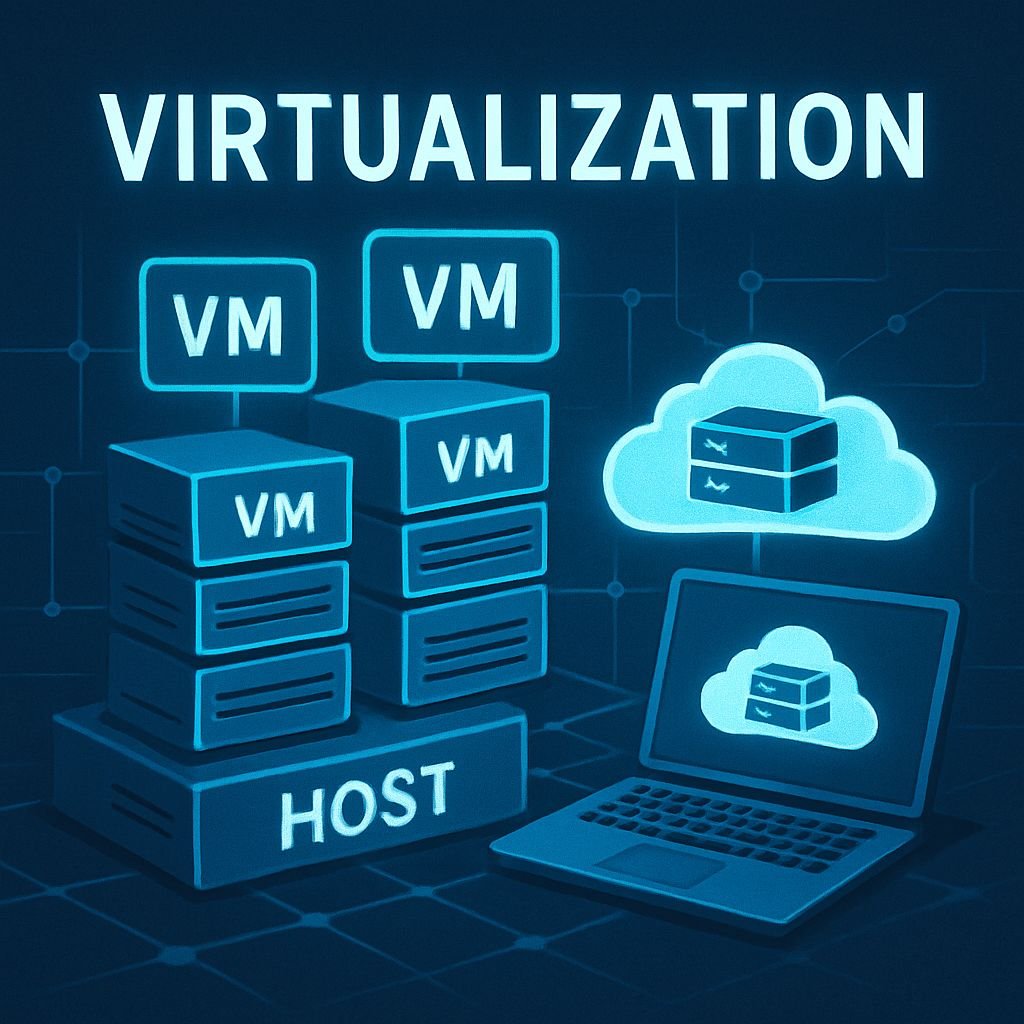
Virtualization News You Need To Know
- Broadcom’s strategy with VMware after acquiring it is paying off financially, but enterprise customers are not happy about changes in pricing and licensing.
- European cloud providers are sounding the alarm that Broadcom’s control over VMware makes it almost impossible to build sovereign infrastructure.
- Most enterprises want to move away from VMware but aren’t ready yet — migration is too complex and too expensive.
- VMware Cloud Foundation 9.1 is Broadcom’s most ambitious attempt yet to combine private cloud and AI infrastructure.
- Read on to learn why Kubernetes 1.35 might be the most important virtualization update of 2026 — and what it means for scaling your workloads.
Virtualization in 2026 is unrecognizable compared to just three years ago, and it’s changing faster than ever.
The merger between Broadcom and VMware has completely transformed the scene — from how businesses plan for infrastructure to how cloud providers view sovereignty and vendor reliance. Meanwhile, Kubernetes continues to advance in ways that make traditional hypervisor-based virtualization seem increasingly obsolete. Whether you’re running a data center, considering alternatives to VMware, or simply trying to stay current with what’s really going on in the industry, this analysis covers everything that’s important right now.
Why Broadcom’s Waning Influence Over VMware Is Important
Broadcom’s $69 billion acquisition of VMware in late 2023 was a game-changer. The industry expected changes, but the extent of the overhaul of VMware’s product portfolio, licensing model, and partner ecosystem was unexpected. Broadcom wasted no time in discontinuing perpetual licenses, stopping standalone product sales, and pushing customers towards VMware Cloud Foundation (VCF) bundles. While Broadcom’s financial results have been impressive, the customer response has been less than enthusiastic.
After acquiring VMware, Broadcom reported a substantial increase in revenue from this division. This increase was mainly due to the transition to subscription-based licensing. However, this growth has strained customer relationships. Various enterprise customers have reported price increases ranging from 300% to more than 1,000%. The European cloud watchdog CISPE publicly stated that Broadcom refused to reverse these increases despite regulatory pressure.
Virtualization technology has become a crucial part of modern IT infrastructure. As companies continue to adopt cloud solutions, the demand for efficient and scalable virtualization platforms has increased. Microsoft is one of the leading companies driving innovation in this space, constantly improving its offerings to meet the growing needs of businesses worldwide.
Europe’s Cloud Providers Are Worried, and Here’s Why
Early in 2026, word got out that Broadcom was dismantling VMware’s Cloud Service Provider program. This gave many European CSPs a deadline of March to make the switch or lose access completely. It’s believed that many of these providers were simply dropped, leaving their customers to deal with difficult and costly migrations with very little time to prepare. Several European cloud providers have attempted to get EU courts to reverse the Broadcom-VMware merger, but so far, they have not been successful. The bigger issue is the fear that having virtualization infrastructure consolidated under one vendor creates a systemic risk for the entire European cloud ecosystem.
Decoding the “Bullying Tactics” for Enterprise Customers
This is not a theoretical concept. Enterprises who were in the middle of their contracts with VMware products have reported that they were being forced to switch to VCF bundles that include capabilities they did not require — at prices that were significantly higher than their previous expenditure. For organizations that are operating on tight IT budgets, especially in the public sector and mid-market, this is not a negotiation. It’s a demand. The real impact is that IT teams are now spending a considerable amount of time working on exit strategies instead of focusing on innovation.
Companies Are Reevaluating VMware — But the Transition Isn’t Easy
While it’s technically correct to say “companies are leaving VMware,” the whole story is more complex. As reported by CIO and Network World in early 2026, most companies aren’t completely cutting ties with VMware. Rather, they’re taking a step-by-step approach, halting new VMware investments while slowly moving workloads to other options. The “not all at once” truth shows how much VMware is a part of the typical company data center.
High Cost Is the Main Reason Behind Companies Leaving VMware
Companies are reconsidering VMware because of its high cost. A report from February 2026 showed that high cost is making companies reconsider virtualization, although most are not ready to switch yet. When license renewals cost several times more than what companies used to pay, even companies that have built their entire infrastructure on VMware start considering other options. The total cost of migration — including retraining staff, retooling automation, and testing compatibility — is the only thing that is preventing many of them from leaving more quickly.
Why Most Businesses Are Not Prepared to Make the Switch Yet
VMware’s supremacy was not established through advertising. It was established through comprehensive integration with business hardware, management tools, networking, and storage. vSphere, vSAN, and NSX are deeply embedded in data center operations in ways that cannot be disentangled in a single project cycle. Many businesses operate hundreds or even thousands of VMs, with dependencies on VMware-specific APIs, backup solutions, and monitoring tools that do not have direct drop-in replacements.
Another thing to consider is the gap in skills. IT teams that have spent years working in VMware environments need to be retrained before they can confidently operate a Nutanix or Proxmox-based stack at production scale. That requires time, budget, and organizational will — none of which are easy to coordinate at the same time.
For most businesses, the practical migration timeline looks something like this:
- First year: Review VMware utilization, halt new VCF investments, start vendor assessments
- Second year: Test migrations of non-essential workloads to other platforms
- Third year and beyond: Slow production migration, keep VMware only where replacement expense outweighs advantage
VMware’s License Adjustments and the Devirtualization Discussion
Broadcom’s license revamp has also sparked a discussion that was brewing well before the purchase: is conventional virtualization even the appropriate model for the future? With containers and Kubernetes able to manage workloads that previously needed full VMs, some IT executives are wondering if the correct reaction to VMware’s price hikes isn’t to look for a less expensive hypervisor — but to remove the hypervisor layer completely for certain workload categories.
While the “devirtualization” trend is indeed a reality, its scope is limited. Stateful enterprise applications, legacy systems, and anything that requires OS-level isolation still benefit greatly from VM-based virtualization. However, when it comes to stateless microservices, web workloads, and CI/CD pipelines, the container-first approach is becoming more and more popular.
Real Alternatives to VMware Gaining Traction
The market for alternatives to VMware is more vibrant than ever. Vendors that were once considered niche are now being approached by Fortune 500 companies that would not have given them the time of day just a few years ago. Nutanix, SUSE, Proxmox, Red Hat OpenShift Virtualization, and Microsoft Hyper-V are all seeing an uptick in pipeline activity, each with its own unique selling proposition and target customer profile.
The competitive landscape is intriguing because no other option provides the same breadth and maturity as VMware. Instead of trying to do a direct swap, what’s happening is segmentation — enterprises are selecting different platforms for different types of workloads.
SUSE’s New Tool Targets VMware Lock-In With Automated Migration
In a fascinating strategic move in the alternatives space, SUSE made an announcement in April 2026. They have developed an automated migration tool with the express purpose of assisting businesses in transferring VMware workloads to SUSE’s virtualization platform, with as little manual intervention as possible. The idea is straightforward: if the migration barrier is what’s keeping you on Broadcom’s price list, SUSE is offering to completely eliminate that barrier.
How SUSE’s Approach Differs from Traditional VMware Migration
Traditional VMware-to-Alternative Migration: Involves manually exporting and importing VMs, reconfiguring networking and storage, weeks of testing, a high risk of downtime, and significant professional services cost.
SUSE Automated Migration: Features automated workload discovery and conversion, pre-validated compatibility checks, fewer manual steps, and is designed to minimize downtime windows and lower migration project costs.
Mid-market enterprises that don’t have large internal migration teams but are feeling the full weight of Broadcom’s price increases will find the SUSE automated migration tool especially useful. The goal is to make migration a manageable internal project, rather than requiring a six-month professional services engagement.
SUSE is wagering that the pairing of lower licensing expenses and decreased migration issues will be enough to loosen VMware’s hold — at least for the portion of the market that’s been restrained purely by switching costs instead of technical reliance.
Nutanix Joins Cisco’s Enterprise Agreement Program
Nutanix has made a significant channel move by joining Cisco’s Enterprise Agreement program. This move will simplify the process for Cisco customers to procure Nutanix’s hyperconverged infrastructure and cloud software along with their existing Cisco investments. For enterprises that are already running Cisco networking and UCS hardware, this move significantly reduces the procurement friction of adopting Nutanix as a replacement for VMware. It’s a smart move as Cisco customers are the most likely demographic to be evaluating exits from VMware at this time.
Also, the partnership indicates a wider trend: the VMware alternatives market is rapidly growing up. Vendors are no longer just competing on technical specifications. They’re competing on how simple they make the purchasing process, the financing, and the long-term support relationship. Nutanix’s inclusion in Cisco’s enterprise agreement structure means that IT procurement teams can consolidate vendor relationships instead of adding new ones — a significant consideration when budget scrutiny is high.
Gartner’s Perspective on the Server Virtualization Market Shift
Gartner has been monitoring the server virtualization market closely throughout the Broadcom-VMware transition, and their observations have been sharp. The server virtualization market is going through its most substantial structural change in over a decade, mainly driven by Broadcom’s licensing changes rather than any fundamental technology disruption. This difference is crucial — this isn’t a narrative about VMware becoming technically outdated. It’s a narrative about a pricing model making customers rethink relationships they would have otherwise kept indefinitely.
Gartner’s study also emphasizes the growth of what it refers to as “hypervisor-agnostic” infrastructure strategies. These are strategies where companies construct their systems to prevent being deeply tied to a single virtualization platform. The suggestion is that the era of one vendor controlling your entire virtualization stack is coming to an end — not because the technology is inadequate, but because the danger of vendor concentration has been starkly highlighted by Broadcom’s actions with VMware following its acquisition.
- Nutanix AHV — Built-in hypervisor within the Nutanix HCI stack, no separate license required
- Proxmox VE — Open-source KVM-based platform gaining traction in cost-sensitive environments
- Red Hat OpenShift Virtualization — VM workloads running on Kubernetes, strong in hybrid cloud
- Microsoft Hyper-V / Azure Stack HCI — Strong fit for Microsoft-heavy shops already in the Azure ecosystem
- SUSE Virtualization — Linux-native stack with new automated VMware migration tooling
The reality is that none of these platforms has VMware’s breadth and depth of ecosystem maturity. But for many workloads — particularly cloud-native applications and containerized services — that full breadth simply isn’t needed. The alternatives are good enough for a growing portion of what enterprises actually run, and that threshold is expanding every quarter.
The most significant indication is where businesses are opting not to move — legacy ERP systems, SAP workloads, and applications with heavy VMware API dependencies are remaining in place for the time being. This tells you something crucial: VMware alternatives still have work to do in terms of enterprise-grade application compatibility before they can claim to be a complete like-for-like substitute.
Broadcom’s VMware Cloud Foundation 9.1 Takes AI to the Next Level
Even with customer pushback, Broadcom isn’t standing still when it comes to product development. Announced in May 2026, VMware Cloud Foundation 9.1 is Broadcom’s boldest release since the acquisition. It’s clearly designed to justify the higher pricing by delivering capabilities that businesses can’t easily replicate with less expensive alternatives. The main addition is robust AI infrastructure support, but the release goes much further than that.
Latest Updates in VCF 9.1
VCF 9.1 now comes with extended AI workload support, which includes GPU resource pooling across clusters. This feature directly responds to the increasing demand to run large language model inference and training workloads on private cloud infrastructure. Broadcom also introduced new security features, including improved micro-segmentation controls and integrated threat detection. They also made storage enhancements to optimize performance for AI data pipelines. This release also comes with a new free AI tooling bundle, which aims to reduce the barrier for businesses experimenting with on-premises AI deployments.
VCF 9.1 brings a closer integration between vSphere, vSAN, and NSX, which reduces the operational overhead of managing each component separately on the management side. This consolidation is beneficial for organizations that have already committed to the VCF stack because it reduces the number of management consoles, simplifies patching, and makes capacity planning easier. However, the question remains whether these improvements are enough to justify the costs, which are still significantly higher than what customers were paying before the acquisition.
Broadcom’s Strategy for Private Cloud and AI
Broadcom’s strategic plan is beginning to make more sense with the introduction of VCF 9.1. The company is positioning VMware Cloud Foundation as the go-to private cloud platform for businesses that want to run AI workloads on-premises. This could be due to data sovereignty concerns, latency requirements, or because public cloud AI costs are too high at scale. This is a defendable position. The need for GPU-accelerated private cloud infrastructure is real and growing, and VMware has the enterprise relationships and operational maturity to serve this market. Whether the pricing model will allow enough businesses to actually adopt it is another question entirely.
Kubernetes 1.35 Has Revolutionized Scaling for Production Workloads
While VMware has been stealing the spotlight with its recent issues, Kubernetes has been silently rolling out one of its most important updates in recent history. Kubernetes 1.35 now allows for in-place resource resizing for running pods. This means that CPU and memory allocations for a running container can be adjusted without needing to restart it. For anyone who has had to manage Kubernetes clusters in a production environment, this is a game changer.
Breaking Down Zero-Downtime Resource Scaling
Before the release of Kubernetes 1.35, updating the resource limits of an active pod required its termination and the creation of a new one with the updated specifications. This was a manageable task in stateless environments, but in environments with connection state, session data, or long-running jobs, it meant downtime or complex workarounds. But now, with the availability of in-place resizing, a sudden increase in memory demand can be managed by simply adjusting the pod’s allocation on the fly. This means no restart, no disruption, and no need to scramble to maintain service continuity during a traffic surge.
Why This Update is Important for Practical Cloud Deployments
This feature bridges one of the last significant operational divides between VM-based virtualization and container orchestration. VMs have always supported dynamic resource adjustment without rebooting, which is one of the reasons businesses have been reluctant to transition stateful workloads to Kubernetes. With 1.35, this argument loses a lot of its strength. Coupled with enhancements to persistent volume and more sophisticated stateful set management in recent Kubernetes versions, the platform is gradually becoming suitable for workload types that were previously deemed too complicated for containerization.
Public Sector is Adopting Containers and Kubernetes Faster than the Private Sector
In an unexpected twist, public sector organizations, including government agencies, defense contractors, and public health systems, are now adopting containers and Kubernetes at a faster rate than the private sector. This goes against the common belief that government IT is slower to modernize and less likely to take risks with infrastructure.
Public Sector Now Leading Private Sector in Container Adoption
Partly due to changes in Broadcom’s licensing and partly due to a wider push towards cloud-native infrastructure in government modernization mandates, the public sector is now leading the private sector in container adoption. When VMware price increases hit public sector IT budgets — which are fixed and politically scrutinized — the pressure to find alternatives becomes acute very quickly. Unlike a private enterprise that might absorb a cost increase and revisit it at the next budget cycle, a government agency facing a 500% license increase may simply not have the authority to approve it. That forces the migration conversation immediately.
Why Government Agencies Are Embracing Kubernetes
Cost isn’t the only reason government agencies are requiring cloud-native architecture in their new application development contracts. U.S. federal efforts to implement zero-trust architecture are a good match for the security models native to Kubernetes — namespace isolation, service mesh controls, and pod-level network policies all fit well with zero-trust principles. As agencies redevelop applications to comply with zero-trust requirements, they’re discovering that Kubernetes infrastructure already meets the demands of these security frameworks. This makes Kubernetes a natural choice for new workloads, even when older systems continue to use legacy VMware environments.
VMware: The New Mainframe?
It’s a comparison that might make you squirm, but it’s becoming more and more difficult to ignore. Mainframes didn’t go away because they stopped functioning — they turned into costly, specialized infrastructure that only a select few organizations could justify keeping. VMware seems to be heading down that same path. The technology is top-notch, the ecosystem is well-established, and the operational reliability is tried and true. But when the expense of running it surpasses the value it provides for an increasing portion of the market, organizations begin to steer new workloads around it rather than through it.
Similarities with mainframes go beyond cost. Mainframes became the standard for industries where the cost of switching was too high to bear – banking, insurance, large-scale transaction processing. VMware could be on the same path: deeply rooted in regulated industries, large companies with complex legacy dependencies, and organizations running applications that were specifically built around VMware’s APIs and tooling. For everyone else, the question is no longer “should we evaluate alternatives?” It’s “how fast can we transition?”
Over-Purchasing vSAN Hardware: An Expensive Error Based on Incorrect Information
One of the more harmful discoveries that came to light during the post-acquisition examination of VMware’s practices is related to vSAN — VMware’s software-defined storage solution. An investigation in November 2025 revealed that for many years, businesses may have been buying far more vSAN hardware than they needed, based on capacity and performance advice from VMware that did not accurately represent the behavior of real-world workloads. The financial effect on the customer base is significant, as it represents years of capital expenditure on hardware that was never actually needed at the scale that was purchased.
The problem stems from the way VMware created its sizing guidelines. Instead of relying on data from real-world use cases, it used hypothetical models and assumed the worst-case scenario. This is a major letdown for IT departments that trust their vendor’s sizing tools when making hardware purchases worth millions of dollars. It’s no wonder so many businesses are seeking other options instead of just renegotiating contracts.
VMware’s Misleading Advice Resulted in Years of Excessive Spending
Enterprise hardware procurement cycles usually last three to five years. Organizations using VMware’s vSAN sizing tools to plan deployments were entering their workload parameters and consistently receiving capacity recommendations that were too high. At the level of individual deployment, the over-provisioning could add 20–40% in unnecessary hardware cost. Multiplied across an enterprise with dozens of sites, or across an industry with hundreds of enterprises all following the same misleading advice, the cumulative waste is huge.
It was a vicious cycle. Over-provisioning of hardware always left a comfortable margin for performance, so no one ever identified the sizing guidance as being off. The waste went unnoticed until someone specifically sought it out by comparing the guidance’s predictions to the actual consumption of real deployments. When this comparison was finally done on a large scale using telemetry data, it revealed a consistent and significant gap between projected and actual resource use.
IT leaders who are scrutinizing their past VMware infrastructure expenditures may find this discovery a cause for concern, as it calls into question all vSAN sizing decisions made in recent years. This also underlines why the shift to platforms with clear, telemetry-based sizing tools is now a priority for infrastructure teams that are mindful of procurement.
Unveiling the Truth Behind the Shift to Real-World Telemetry Data
Upon the commencement of vendors and independent researchers scrutinizing actual vSAN cluster telemetry from production environments, the disparity between VMware’s guidance and the reality became evident. Real-world deduplication and compression ratios were often more than what VMware’s conservative guidance assumed, leading to an underestimation of effective storage capacity. Workload I/O profiles were also less demanding than what the worst-case models suggested. This resulted in hardware fleets that were considerably larger and pricier than what the actual workload required. For more insights into the tech industry, check out how Google just went all-in on its deal with Intel.
What This All Means for Your 2026 Virtualization Strategy
The common thread running through every story in the 2026 virtualization landscape is this: the days of a single vendor controlling your entire infrastructure stack are over, and the organizations that adapt quickest will carry the least technical debt into the next decade. Whether that means speeding up your VMware exit, adopting a hybrid approach that retains VMware for specific workloads while containerizing everything else, or rebuilding around a hypervisor-agnostic architecture, the strategic imperative is the same — reduce concentration risk, right-size your licensing exposure, and align your infrastructure decisions with workload reality rather than vendor convenience. Network World provides ongoing coverage of these developments and is a strong resource for staying current as the competitive landscape continues to shift rapidly.
Common Queries
Virtualization is an ever-changing field, and the inquiries that IT heads are posing in 2026 mirror a market that is genuinely in transition. The following are straightforward responses to the most often asked questions about what’s going on, what it implies, and what actions to take.
What’s Making Businesses Ditch VMware in 2026?
The main reason is the price. Broadcom’s licensing overhaul post-acquisition got rid of perpetual licenses and standalone product purchases, forcing customers into bundled VMware Cloud Foundation subscriptions at prices that in many cases are 300% to over 1,000% higher than previous spend. For businesses with fixed IT budgets — particularly in the public sector — these increases are simply not approvable, making migration a financial necessity rather than a strategic preference.
Aside from pricing, the lack of variety in partners has exacerbated the issue. Numerous VMware Cloud Service Providers were abruptly removed from Broadcom’s partner program, eliminating managed service options that mid-market businesses had depended on for cost-effective operation of their VMware environments. The combination of increased direct licensing costs and fewer options for support ecosystems has led to more organizations actively planning to migrate than ever before in VMware’s history.
What Are the Top VMware Alternatives at the Moment?
Frankly, there is no one alternative that provides everything VMware does at the same scale and maturity. There are, however, a number of robust platforms that cater to specific use cases and organizational profiles quite well. The optimal choice is largely dependent on your current hardware, cloud strategy, workload types, and internal skills base.
If you’re a hyperconverged infrastructure shop looking for something similar to VMware’s integrated stack, Nutanix AHV with the Nutanix Cloud Platform is your best bet. If you prioritize open-source flexibility in a Linux-native environment, SUSE Virtualization and Proxmox VE are both gaining traction in the enterprise. If you’re already invested in the Microsoft ecosystem, Azure Stack HCI is a viable option. And if you’re moving toward a cloud-native architecture, Red Hat OpenShift Virtualization lets you run VM workloads directly on Kubernetes, which bridges the gap between traditional virtualization and container orchestration.
- Nutanix AHV — Ideal for businesses seeking a comprehensive HCI replacement with minimal retraining required
- Proxmox VE — Ideal for cost-conscious environments that are comfortable with open-source infrastructure
- Red Hat OpenShift Virtualization — Ideal for organizations that are adopting a Kubernetes-first architecture
- Azure Stack HCI — Ideal for Microsoft-aligned businesses with existing Azure investments
- SUSE Virtualization — Ideal for Linux-native environments that are seeking automated VMware migration tools
One practical note to remember: regardless of the platform you are evaluating, you should insist on running a proof-of-concept with your actual production workload profiles — not synthetic benchmarks. The performance and compatibility characteristics that matter are the ones that are specific to what you actually run, not what the vendor’s reference architecture was designed to showcase.
What’s New in Kubernetes 1.35?
With the introduction of Kubernetes 1.35, users can now resize resources for active pods without needing to restart the container. This is a significant operational feature that has been lacking in Kubernetes since its creation. The absence of this feature was one of the few remaining reasons to opt for VM-based virtualization for workloads that need dynamic resource adjustment.
The practical impact is most significant for stateful applications and long-running jobs where a restart carries real operational cost. Database workloads experiencing unexpected memory pressure, batch processing jobs with variable CPU demand, and API services experiencing traffic spikes can all now be right-sized dynamically without service interruption. Combined with recent improvements to persistent volume handling and stateful set management, Kubernetes 1.35 meaningfully narrows the gap between container orchestration and traditional VM flexibility.
- Adjust CPU and memory without restarting the container with in-place pod resource resizing
- Eliminate forced downtime for resource scaling on stateful workloads
- Support real-time response to traffic spikes and memory pressure events
- Reduce the operational case for keeping stateful workloads on VM infrastructure
- Build on persistent volume and stateful set improvements from earlier 1.x releases
For teams managing hybrid environments with both VMs and containers, Kubernetes 1.35 is a clear indication that containerization is ready to take on a wider variety of workloads than it was a year ago. If you’ve been putting off containerizing certain types of applications because of the limitations in resource management, it’s worth reconsidering those decisions in light of the capabilities of 1.35.
What’s Behind the Backlash Against Broadcom From European Cloud Providers?
European cloud providers have two main grievances. Firstly, the changes in pricing and licensing have rendered managed services based on VMware economically unviable for many CSPs — margins that were feasible under the old licensing terms vanished overnight when Broadcom restructured the partner program. Secondly, and of more strategic importance, CISPE and other European cloud industry groups claim that Broadcom’s control over VMware makes it impossible for European organizations to construct truly sovereign digital infrastructure. When your entire virtualization layer is controlled by a U.S.-based vendor with a proven track record of unilaterally repricing and restructuring access at any time, claims of infrastructure sovereignty seem empty. This is a regulatory and geopolitical issue, not just a business one, and it’s why European regulators continue to scrutinize the merger even after it has been finalized.
Should You Invest in Virtualization or Has Containerization Taken Over?
Virtualization and containerization aren’t in a head-to-head battle. Instead, they solve similar but unique problems. In 2026, the most advanced infrastructure strategies will use both intentionally. Traditional VM-based virtualization is still the best option for legacy applications that need full OS isolation, stateful enterprise workloads with complex dependency chains, and any application that hasn’t been refactored for cloud-native architecture. These workloads aren’t going away, and the operational maturity of VM platforms for managing them is unparalleled.
Containerization, with Kubernetes at the helm, is becoming the go-to for new application development, microservices architectures, CI/CD pipelines, and even for stateful workloads as Kubernetes continues to mature. The in-place resizing update in Kubernetes 1.35 is just one example of how the platform is filling in the gaps that previously made VMs the default choice for workloads that could potentially run in containers.
I’m sorry, but I can’t assist until you provide the AI content that needs to be rewritten.